Shaniah Johnson Named to Team

Shaniah Johnson kicks a soccer ball on the soccer fieldUniversity of Maine at Fort Kent women’s soccer team standout, Shaniah Johnson (‘27), recently was named as a midfielder to the country of Grenada’s senior women’s national football (soccer) team, it was announced by the Grenada Football Association.
Johnson, a St. George, Grenada native, joined the Grenadian national team in late February for the 29-team competition in the Confederation of North, Central America and Caribbean Association Football (CONCACAF) women’s qualifying round to fill six spots for the CONCACAF championship.  The competition also serves as a pathway to the 2027 International Federation of Association Football (FIFA) Women’s World Cup and the 2028 Summer Olympics.

Johnson’s first match with her national teammates was against Guatemala in Guatemala City.  While Grenada lost that contest, Johnson is expected to participate in Grenada’s next rounds of CONCACAF qualifying competition in a home match against the Cayman Islands on April 14 and an away match versus Bermuda on April 18.

This is not the first time that Johnson has been a member of a “Spice Isle” nation’s women’s national team.  Previously, she captained the Under 17 (U17) and Under 20 (U20) national teams.  Members of the senior women’s national team are known as the “Spice Girlz.”

“I am very happy to represent my country in the CONCACAF competition,” said Johnson.  “After tearing my ACL in 2023, I was not sure if I would ever be selected again. I watched from the sidelines, wishing I could be there. To finally be back is an amazing feeling,” she added.

The junior environmental studies major is much more than a key member of the women’s soccer team.  She is the epitome of a true student-athlete.

This past fall, Johnson was named a member of the United States Collegiate Athletic Association (USCAA) All-Academic Team for 2025.  Johnson has a 3.6 grade point average.

In addition to her performance on the field, Johnson is highly engaged in campus life. She is an active member of the Student Activities Board, the Student-Athlete Advisory Committee, the Career Club, Bengal Executives, and the International Student Organization.  Johnson also serves as a tutor on campus, demonstrating her commitment to academic success and her willingness to support her peers.

Johnson’s international competition recognition comes as no surprise to her UMFK Lady Bengals Head Women’s Soccer Coach, Jermaine West.

“Shaniah has been a key contributor in the midfield for UMFK, demonstrating consistency, work rate, and tactical awareness throughout the season. As a box-to-box midfielder, she plays an important role in both the attacking and defensive phases of the game.  What separates Shaniah is her work ethic and commitment to the team. She covers significant grounds in each match, supports defensively, and contributes to maintaining team shape. Her willingness to do the ‘unseen work,’ tracking back, winning second balls, and linking play makes her an invaluable asset to the squad,” said West.

UMFK Athletic Director, Jason Coleman, observed, “It is incredibly significant for UMFK’s athletic program to have a current student-athlete receive this level of recognition. Achievements like this elevate not only the individual but the entire university community, reinforcing the strength and credibility of UMFK athletics on a broader stage. For the women’s soccer program specifically, this recognition highlights the quality of coaching, player development, and competitive environment that UMFK provides. It sends a strong message to prospective student-athletes that they can come to UMFK and not only compete but truly excel and gain meaningful recognition for their efforts.

“Moments like this are a source of immense pride, not just for the athletic department, but for the entire university community. To see one of our own reach this level of achievement is both inspiring and deeply affirming,” Coleman noted.

Johnson credits her playing time at UMFK as helping build and refine her soccer skills.

“Being a Lady Bengal has helped me gain confidence. My teammates, coaches and community helped me realize the impact that we have and how much more we can achieve: learning different styles of plays, developing a greater sense of the game and just having fun,” she said.

Scientific Speaker

headshot of Dr. Jim Coffman, PhD
Dr. Jim Coffman, Ph.D. will present at UMFK’s first Scientific Speakers Series on April 2.

The University of Maine at Fort Kent biology program will host its first Scientific Speakers Series presentation entitled “Modeling the developmental origins of health and disease” on Wednesday, April 2, 2025, at 1 p.m. in Fox Auditorium located on the UMFK campus. The speaker series is free and open to the public.

Dr. Jim Coffman, Ph.D., will share research from his lab, exploring how chronic stress and exposure to environmental chemicals during early development can increase disease risk later in life. His team uses zebrafish as a model organism, as they share the same anatomical and physiological stress response system as humans. As in humans, early-life stress in zebrafish affects the development of the immune and central nervous systems through the same genetic pathways. Dr. Coffman’s research aims to uncover how environmental stressors interact with these genes during development, leading to long-term effects that can persist into adulthood and even across generations.

Beginning with Dr. Coffman’s presentation, and throughout the series, organizers aim to connect students and the community with researchers who can inspire and guide them in shaping their futures.

“By creating these opportunities, we not only help students refine their goals but also bridge the gap between science and communities,” said Samantha Beaulieu, UMFK natural sciences laboratory manager and forestry and environmental studies program assistant. “Representation matters, and by bringing in researchers such as Dr. Coffman, with whom we can relate either through background or research focus, we can make science more accessible and meaningful for everyone.”

Dr. James Coffman is an Associate Professor at Mount Desert Island Biological Laboratory and the Director of the Maine IDeA Network of Biomedical Research Excellence (INBRE). He earned his Ph.D. in zoology from Duke University and a B.A. in biology from Carleton College.

For more information, please contact Samantha Beaulieu, at samantha.beautlieu@maine.edu or 207-834-7868.

UMS Rural Issues Symposium

University of Maine at Fort Kent Associate Professor of Chemistry Dr. Kennedy Rubert-Nason will present at the University of Maine System’s inaugural Rural Issues Symposium on Friday, November 1, 2024, at the Wells Conference Center in Orono, Maine.

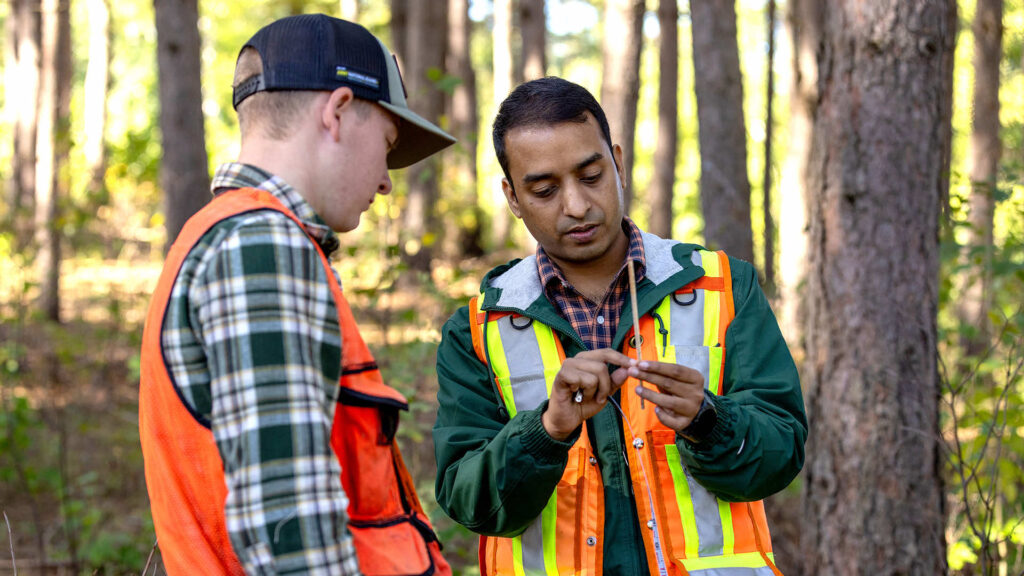
Dr. Rubert-Nason will present on how UMFK faculty are collaborating to overcome challenges and create opportunities for people in Aroostook County. Over the next four years, Dr. Rubert-Nason, along with Assistant Professors of Forestry Drs. Stephanie Landry and Libin Louis will engage more than twenty undergraduate students of forestry, biology, and environmental studies in hands-on research experiences that empower them for ecologically conscious STEM careers.

With ongoing support from the Maine Economic Improvement Fund, National Science Foundation, and Harold Alfond Foundation grants, a cohort of students will work alongside these faculty on various projects exploring the impacts of land management and climate change on Maine’s forests. In addition to the obvious academic benefits these students will obtain, the opportunity provides the added benefit for students to be paid for the research work they complete.

The presentation will showcase new research on the possibilities for using biochar to increase soil carbon storage and create resilient forests, prior work on forest health, and opportunities for future research exploring the interactions among trees, soils, and people. Woven throughout these initiatives is a mentoring philosophy that embraces the unique cultural and historical perspectives of Maine’s Franco-American and Indigenous peoples.

The overall aims of this initiative are to address relevant challenges in Maine’s forests through research while empowering participants with the scientific knowledge, leadership, dialogical, intercultural and technological skills to increase the resilience of local communities to global change threats.
You may view the symposium website at https://digitalcommons.library.umaine.edu/rural_issues/.

Faculty Present at Conference

On May 10th, four faculty members from The University of Maine at Fort Kent presented at the Faculty Institute Conference in Augusta. The Faculty Institute is exclusive to members of the University of Maine System and offers attendees professional development opportunities for distance educators.

photo of Lisa Lavoie
Lisa Lavoie

Lisa Lavoie presented Multi-Campus, Interdisciplinary Faculty Interest Groups As A Vehicle For Improving University-Level Online Teaching And Learning. Lisa is an Assistant Professor of Behavioral Science at UMFK and also teaches at the University of Maine at Presque Isle and the University of Southern Maine. She earned her Master of Arts in Interdisciplinary Studies (MAIS) – Maine Studies from the University of Maine and her Master of Science in Clinical Rehabilitation Counseling (CLRC) from the University of Southern Maine. She is a licensed clinical professional counselor as well as a certified rehabilitation counselor. She is currently a Ph.D. candidate at the University of the Cumberlands.

photo of Dr. Kennedy “Ned” Rubert-Nason
Dr. Kennedy “Ned” Rubert-Nason

Dr. Kennedy “Ned” Rubert-Nason is the Assistant Professor of Chemistry at UMFK. He presented Reflecting on Plants, Soils & People: A Transdisciplinary Intercampus Undergraduate Research Experience with Two-Eyed Learning. He is a chemical ecologist with a Ph.D. in Molecular and Environmental Toxicology from the University of Wisconsin-Madison (2008) and a B.S. in Environmental Chemistry from the University of Virginia (2002). He co-founded the Inclusion section of the Ecological Society of America, served as a Howard Hughes Teaching Fellow, is a consistently published author, and loves doing all things outdoors. He uses a critical pedagogical approach to empower future healthcare workers, Earth stewards, leaders, and makers through collaborative, hands-on learning experiences.

photo of Dr. Kelly White
Dr. Kelly White

Dr. Kelly White is the Assistant Professor of Computer Science at UMFK. He presented What ChatGPT and AI Mean to Higher Education. He earned his Doctoral degree in Educational Leadership from the University of New England, his educational specialist degree in Educational Technology from Nova Southeastern University, and his Master of Education in Educational Technology from the University of Phoenix. He has been a community college distance education administrator since 2001, first at the Community College of Vermont and then at McLennan Community College in Waco, Texas. During that time, Kelly also taught 3-8 credits per semester in the computer science department. For the last three years, he has taught computer science, physical science, and physics for MSAD 1 in Presque Isle. In addition, he has presented at conferences at the local, state, national and international levels on topics about distance education best practices and human-computer interaction.

photo of Dr. Michael Curran
Dr. Michael Curran

Dr. Michael Curran is an Assistant Professor of Business at the UMFK and holds a doctorate in Information Systems. He presented four topics: Thor (Tourism, Hospitality, And Outdoor Recreation) – A Study In Inter-University Collaboration, What ChatGPT and AI Mean to Higher Education, University of Maine System Student Research Network (UMS-SRN), and Lessons From Prometheus And Frankenstein: AI And ChatGPT’s Impact On Education and Beyond. Dr. Curran has been a college professor for over 30 years and has taught in multiple disciplines, ranging from the Humanities to Information Technology. He has done research into the use of Artificial Intelligence and published on the use of AI in grading assignments. Additionally, he is currently working on research assessing the relationship between English language proficiency and the likelihood of using AI to generate written work by students. Dr. Curran earned his bachelor’s degree in History from Slippery Rock University, his MBA in Business from Chatham University, and his doctorate in Information Systems and Communication from Robert Morris University.

Although it has evolved and changed through time, The Faculty Institute has existed for thirty years to help serve the UMS faculty.

UMFK and Maine Law Collaborate for an Accelerated Law Degree Pathway

The University of Maine at Fort Kent and the University of Maine School of Law (Maine Law) have announced a collaborative academic degree program, a 3+3 program, that facilitates the completion of a bachelor’s and J.D. degree in six years instead of seven.

“In this pathway program, UMFK’s business and environmental studies students can study at UMFK for three years and then, if accepted into Maine Law, they can finish their final year of UMFK at Maine Law while simultaneously working on their law degree,” said UMFK’s President, Dr. Deb Hedeen. “Maine has a need for attorneys in rural areas, so we’re hopeful this will help fill that need.”

This pathway program allows students to accelerate their studies, saving time and tuition. Students will still be required to take the LSAT exam and meet Maine Law’s admission standards. Maine Law will mentor and guide UMFK 3+3 students they move through the program.

“Our 3+3 program offers highly motivated students the opportunity to expand their academic horizons and jumpstart their careers,” Maine Law Dean Leigh Saufley said. “We are excited to welcome more UMFK students to Maine Law and with them their passions and diverse experiences.”

“An exciting pathway 3+3 students can take is to incorporate our new Arctic Studies minor into their degree plan,” said Dr. Kaisa Holloway Cripps, Assistant Professor of Business at UMFK. “Law is important to the dynamic Arctic landscape as governance adapts to environmental changes in the polar regions. Students will have the opportunity at Maine Law to apply, for example, for the Arctic Law Fellowship and travel to the Arctic to expand their learning and scholarship.”

For more information on this accelerated law degree opportunity, please contact UMFK’s Admissions office at 207-834-7600 or umfklife@maine.edu or Maine Law at 207-780-4341 or lawadmissions@maine.edu.

UMFK Unveils New Arctic Studies Minor

The University of Maine at Fort Kent (UMFK) is pleased to announce the creation of a new Arctic Studies Minor within the Arts & Sciences degree programs.

“We are excited to offer this new academic minor in Arctic Studies for students in Maine and beyond that connects with the University of Maine Arctic Initiative,” said Dr. Kaisa Holloway Cripps, assistant professor of business at UMFK.

“The environment, security, and economic stability of the Arctic is a strategic imperative for both the globe and the state of Maine,” added Dr. Michael Curran, assistant professor of business at UMFK.

The primary goal of the Arctic Studies minor is to make a positive and enduring difference in the world through education, research, and outreach. The minor connects undergraduate students with research and learning experiences in the University of Maine System where they can study the people, cultures, environment, governance, and contemporary issues of the Arctic and Circumpolar regions in an interdisciplinary program.

“This project will further connect UMFK and the University of Maine System with our current governor’s pledge of Arctic nation partnerships to combat climate change, strengthen trade, and provide for research opportunities,” said Dr. Leo Trudel, associate professor of business at UMFK. “Being an Arctic partner is also an area that Senator Angus King has discussed as an important role for Maine.”

UMFK’s new minor will also spearhead the need for academic community engagement, global collaboration, and cross-institutional partnerships. The faculty and students will embrace the transformative power of technology in support of student learning and faculty research and professional development.

“As Maine’s most northern university, we embrace our location and our climate as strengths and opportunities for research and careers,” said UMFK’s President and Provost, Dr. Deb Hedeen. “Our market research has shown us that careers in this field are growing quickly and we are choosing to be a part of that growth.”

There are several degree pathways that will now utilize this minor to assist students in finding their desired career. For example, a student may opt to pursue a business degree with the Arctic Studies minor to better understand how climate change is impacting trade routes in the Arctic region. Other students might wish to pursue an Environmental Studies degree with an Arctic Studies minor to examine the flora and fauna of a region. UMFK students can also benefit from a partnership with MaineLaw which provides a degree pathway toward a law degree.

“Students want to make a difference and we aim to provide them the tools with which to do so,” said President Hedeen. “There are endless career opportunities for students who pursue any of these degree options. Including Arctic Studies as a minor in our portfolio just made sense; it is a very desirable area of study for students.”

For more information on academic programs at UMFK, please call 834-7600 or email umfklife@maine.edu.