
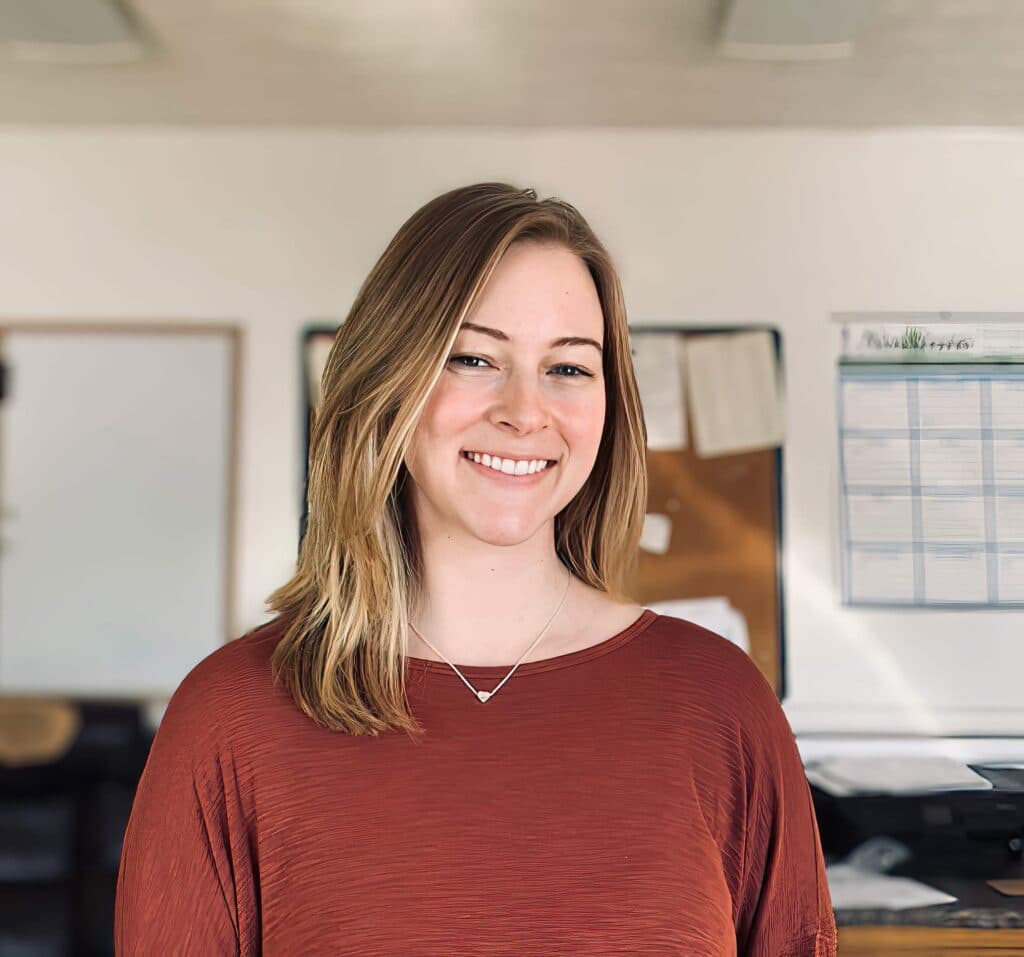
UMFK To Hold Winter Triathlon

The University of Maine at Fort Kent’s Alumni Association is pleased to announce the first annual Ski, Shoe, Ski Winter Triathlon event on March 20, 2022.

“This fun event combines three different winter activities into a race here in Fort Kent,” said UMFK’s Foundation Officer, Shannon Lugdon. “Participants can compete individually or as part of a team.”

The race begins at the Fort Kent Outdoor Center for a loop of cross-country skiing and then switches to a snowshoe hike up the side of the Lonesome Pines Trails hill. The race ends with participants speeding down a designated section of Lonesome Pine Trails. Prizes will be awarded in several competitor categories such as, youngest, oldest, fastest, slowest, costumes, and more!

“While this event is a competition, we’re hoping people have fun participating in the three legs of the race,” said UMFK’s Alumni Association President, Sue Devoe. “These are the most popular things to do in Fort Kent in the winter so we thought it would be interesting to put them together in a race.”

Proceeds from the registration will go toward installing lights on UMFK’s soccer field. “This is a much-needed addition to the athletics program at UMFK,” said Lugdon. “Currently the teams must practice during daylight hours which gets tricky as the days get shorter. This would allow for greater flexibility in their practice and game schedules.”

Registration is $20 for an individual and $45 for a team of three. Registration opens on January 21, 2022, and can be completed here: https://www.umfk.edu/alumni/giving/ski-shoe-ski/ [link no longer active]

For more information, please call Shannon Lugdon at 207-834-7800 or go to www.umfk.edu.

Discover Our Collections: The Unique Story of Public Education in Northern Maine

There is no such thing as a cultural backwater. There are, however, under-resourced areas that lie beyond the reach of state institutions and that must blaze their own path. For generations, such was the case of the Upper St. John Valley.

Britain and the United States resolved their longstanding border dispute in 1842, but many years passed before residents of far northern Maine felt the presence of state institutions in their everyday life—a sparse slate of sheriffs and customs officials was, in normal times, the only face of government.

In other words, Valley residents—the majority being of Acadian and French-Canadian heritage—experienced a great deal of autonomy. While linked commercially with the St. Lawrence River valley and southern New Brunswick, they had to organize themselves and create their own institutional framework. In the field of education, such efforts suffered from a distance, the cost of building and maintaining schools, the scarcity of qualified teachers, and the apathy of parents for whom education was well removed from their daily preoccupations.

As Fr. Francis Brassard explained in his master’s thesis (1967), the population long depended on “roving teachers” who provided the rudiments of formal education for a few months at a time before moving to another location. The growing influence of the Roman Catholic Church from the 1840s to the 1890s offered only limited breakthroughs, for the older obstacles remained. It was instead the creation of a local education system supported by the state, in 1872, that advanced the cause of public instruction in Aroostook County. The Maine legislature pledged funds to towns that organized schools and that met a small number of benchmarks. New laws passed in 1889 and 1893 increased resources (notably providing textbooks) and implemented local supervision of the school system.

The broad terms of these laws offered flexibility—and enabled local communities to be creative in their educational arrangements. In other areas of Maine, due to local cultural and religious conditions, a clear separation between public and private (often denominational) schools arose. In the Upper St. John Valley, led by their Catholic clergy, residents increasingly took advantage of state funds, but responded to teacher shortages by hiring nuns and adapted to scarce resources by turning to those of the Catholic Church.

The initiator of this mixed system appears to have been a Belgian priest named Charles Sweron, who long held the reins of the parish in Frenchville. The Quebec-born Arthur Décary, formerly of the Brunswick parish, would follow his lead and invite the Little Franciscans of Mary to teach in Fort Kent’s common schools in 1906.

But it may be Father Joseph Marcoux’s relationship with the Little Franciscans that proves most telling. Marcoux was born in Sainte-Brigide-d’Iberville, in southern Quebec, in 1850. He served as a vicar in Bedford, Farnham, and Saint-Pie; spent many years in Manitoba as a missionary; and, after 1890, successively became pastor of Wallagrass and Eagle Lake in Maine. The Acadian Archives in Fort Kent have partially reconstituted Marcoux’s correspondence with the Little Franciscans from the collections of the motherhouse in Baie Saint-Paul (MCC-00435).

Marcoux helped recruit the sisters of Baie Saint-Paul to establish and staff a hospital in Eagle Lake; he also worked to maintain a positive relationship that would be responsive to the needs of local residents. In 1912, after consultations with Bishop Louis S. Walsh, the nuns’ salary was doubled, the hospital received $2,500 from the diocese for a new annex, and the religious order obtained a new parcel of land from the bishop—who owned all Church property in Maine—for a new convent. Walsh was regularly involved in many financial decisions involving local schools and hospitals. Although his reputation as anti-French outlived him, he easily turned to the Quebec nuns and, with Marcoux, exerted pressure on the religious order to extend services to the local French-heritage population.

That pressure increased over time. In Eagle Lake, the local superintendent of schools informed Marcoux that a public school could be opened the moment two sisters were secured as teaching staff. The town would provide facilities and all learning materials. Marcoux turned to the Little Franciscans and asked for two sisters, one to teach in French, the other in English. Several months later, he asked for a third who would teach music and singing.

Mother Marie-Dominique, the superior in Baie Saint-Paul, did not accept new requests unquestioningly. In the summer of 1917, she highlighted the defective heating in the school and the cold from which sisters suffered in trips between the school and the hospital. By that point, Marcoux was insistently pleading for a “grant” of five teachers; he hoped to replace two laywomen who were not up to parents’ expectations. This seemed to be beyond the capacity of the Franciscans. The superior also categorically refused to accept boarders at the Eagle Lake school, citing prior issues in Wallagrass; if boarders were taken, she bluntly stated, she would recall the nuns to Quebec.

Relations were no doubt still shaky when Marcoux died of influenza in the fall of 1918. It remains, no less, that northern Maine enjoyed a close relationship with Quebec’s Catholic Church through the Little Franciscans, the Daughters of Wisdom, other religious orders, missionaries and pastors, and the logistical and financial support they all provided to our French-heritage communities. That relationship survived even as Maine enacted an English-only education bill the year after Marcoux’s death.

The mixed system of education—ostensibly public, but “entangled” with religious institutions—continued well into the post-World War II era. Of Fort Kent’s St. Louis School, Brassard wrote, in the 1960s:

« L’édifice scolaire et le terrain sur lequel il repose appartiennent à la paroisse catholique romaine de St. Louis, qui relève de la juridiction de l’évêque catholique de Portland. L’évêque loue les bâtiments au district administratif scolaire no. 27 . . . Selon le contrat, la ville n’a l’usage des bâtiments que pendant les heures de classe de l’année scolaire. En effet, dans le contrat de bail, l’évêque se réserve l’usage des bâtiments de 8h20 à 8h55 à des fins d’instruction religieuse.

« Dans la même ville de Fort Kent, la Market Street School, une école primaire publique, présente une situation quelque peu différente, mais tout aussi particulière. Le terrain et les bâtiments appartiennent à l’État, mais chaque année, suite au vote d’une majorité des citoyens à l’assemblée de la ville, le comité de surintendance des écoles loue la propriété à l’évêque catholique de Portland—pour la somme de 1,00$—entre 8h20 et 9h00 chaque jour du calendrier scolaire à des fins d’instruction religieuse.»

Father Francis Brassard

Through the process of disestablishment and the aftershocks of the Second Vatican Council, these arrangements would slowly unravel in the last third of the twentieth century. Still, women religious taught alongside laypersons in Fort Kent public schools until 1999.

Beyond the unique cultural landscape of the St. John Valley, the history of schools and hospitals in our region reminds us that despite the American trope of separation of church and state, an equal commitment to religious freedom has created complex relationships between religious and civic institutions. If that is true in many parts of the country, in northern Maine we find a special arrangement that lasted nearly a century—with relatively little controversy.

The Acadian Archives offer access to Father Marcoux’s correspondence with the Little Franciscans, but also to a wealth of local histories and primary sources that trace the complicated history of education in the St. John Valley. For additional information or to schedule an appointment, please reach us at acadian@maine.edu or by phone at 207-834-7535.

Patrick Lacroix, Director of Acadian Archives

Further Reading

Aside from the following resources, our library includes broader works about the Catholic Church in Maine, the history of the state and our unique borderland region, and religious education in Quebec. Our Ready Reference files and the finding aid folder belonging to the Marcoux correspondence also include valuable contextual information.

  • Brassard, Francis. “The Origin of Certain Public Schools in the St. John Valley of Aroostook County, Maine.” M.A. thesis, Ottawa University, 1967. Acadian Reference, LC3732.M2 B73 1967.
  • Callnan, Miriam Therese. Aroostook Architect: The Life and Times of the Reverend Joseph S. Marcoux. Brunswick: Harpswell Press, 1977. Acadian Reference, BX4705.M35 C3 1977.
  • Craig, Béatrice, and Maxime Dagenais. The Land in Between: The Upper St. John Valley, Prehistory to World War I. Gardiner: Tilbury House, 2009. Acadian Reference, F1044.S2 L36 2009.
  • Desmeules, Sylvain. Les Petites franciscaines de Marie. Quebec City: Editions GID, 2012. Acadian Reference, BX4392.D47 P47 2012.
  • Les Filles de la Sagesse – Ste-Agathe, Maine – 1904-2004. Ste-Agathe: Ste-Agathe Historical Society, ca. 2004. Acadian Reference, BX4334.8.Z9 F3 2004.
  • Little Franciscan Sisters of Mary 60th Anniversary 1906-1966. Fort Kent: St. Louis Parish, 1966. Acadian Reference, BX1418.S134 L58 1966.
  • The Little Franciscans of Mary: Commemorating Their Ministry to a Variety of Calls and Needs in Northern Maine. Fort Kent: St. Louis Parish, 1999. Acadian Reference, BX1418.S134 L55 1999.
  • Little Franciscans of Mary. The Foundresses: the Little Franciscans of Mary. Paris: Editions du Rameau, 1987. Acadian Reference, BX4392.L57 1987.
  • Marie-Michel-Archange (Sr.). By This Sign You Will Live: History of the Congregation of the Little Franciscans of Mary, 1889-1955. Worcester: n.p., 1964. Acadian Reference, BX4392.G3713 1964.
  • Sance, Elisa E. A. “Language, Identity, and Citizenship: Politics of Education in Madawaska, 1842-1920.” Ph.D. dissert., University of Maine, 2020. UMaine DigitalCommons.

Découvrez nos collections : L’histoire particulière de l’éducation dans le nord du Maine

Il n’y a pas de périphérie lorsqu’il est question de culture, chacune ayant sa légitimité. Il existe cependant des régions moins favorisées qui sont hors de la portée des institutions étatiques et qui doivent tracer leur propre chemin. Ce fut longtemps le cas de la vallée du haut fleuve Saint-Jean.

La Grande-Bretagne et les États-Unis arrivent à s’entendre sur l’emplacement de la frontière en 1842, mais de nombreuses années s’écoulent avant que les habitants de l’extrême nord du Maine ne ressentent la présence de l’État dans leur vie quotidienne. Les rares shérifs et agents de douanes, éparpillés sur ce vaste territoire, sont les seuls visages de l’autorité civile.

Autrement dit, à cette époque, les habitants de la vallée, la majorité étant d’origine acadienne et canadienne-française, jouissent d’une grande autonomie. Bien qu’ils soient liés par le commerce à la vallée du Saint-Laurent et au sud du Nouveau-Brunswick, ils doivent s’organiser eux-mêmes et créer leur propre cadre institutionnel. Dans le domaine de l’éducation, ces efforts sont minés par les grandes distances, le coût de construction et d’entretien des écoles, la pénurie d’enseignants qualifiés et, enfin, l’apathie de parents pour qui une éducation formelle ne rejoint par les soucis du quotidien.

Comme le père Francis Brassard explique dans son mémoire de maîtrise (1967), pendant longtemps la population dépend de « professeurs itinérants » qui lui fournissent les rudiments du savoir pendant quelques mois avant de se rendre ailleurs. L’influence croissante de l’Église catholique des années 1840 jusqu’à la fin du siècle ne permet que des percées limitées, car les anciens obstacles perdurent. C’est plutôt la création d’un système d’instruction local soutenu par l’État, en 1872, qui fait avancer la cause de l’éducation dans le comté d’Aroostook. La législature du Maine promet des fonds aux villes qui organisent des écoles et qui rencontrent des critères assez modestes. De nouvelles lois votées en 1889 et 1893 augmentent les ressources (notamment des manuels fournis par l’État) et mettent en place une supervision locale du système scolaire.

Les dispositions relativement larges de ces lois offrent de la flexibilité et permettent aux communautés d’être créatives dans l’organisation de leurs écoles. Ailleurs dans le Maine, en raison de différentes conditions culturelles et religieuses, une séparation claire entre les écoles publiques et privées (souvent confessionnelles) émerge. Dans la vallée du haut fleuve Saint-Jean, dirigés par leur clergé catholique, les habitants profitent de plus en plus des deniers publics, mais répondent à la pénurie d’enseignants en embauchant des religieuses et s’adaptent au manque de ressources en se tournant vers celles de l’Église catholique.

Le pionnier de ce système mixte semble être un prêtre belge du nom de Charles Sweron, qui est très longtemps curé de la paroisse de Frenchville. Le Québécois Arthur Décary, anciennement de la paroisse de Brunswick, suit son exemple et invite les Petites Franciscaines de Marie à enseigner dans les écoles communes de Fort Kent en 1906.

Or, c’est peut-être la relation du père Joseph Marcoux avec les Petites Franciscaines qui s’avère la plus révélatrice. Marcoux voit le jour à Sainte-Brigide-d’Iberville, dans le sud du Québec, en 1850. Il est vicaire à Bedford, Farnham et Saint-Pie, puis passe de nombreuses années au Manitoba en tant que missionnaire. Après 1890, il devint successivement pasteur de Wallagrass et d’Eagle Lake dans le Maine. Les Archives acadiennes de Fort Kent ont reconstitué en partie la correspondance entre Marcoux et les Petites Franciscaines à partir des collections de la maison mère de Baie Saint-Paul (MCC-00435).

Marcoux aide à recruter les sœurs de Baie Saint-Paul pour établir un hôpital à Eagle Lake et lui assurer le personnel nécessaire. Il s’efforce de maintenir un rapport positif avec les religieuses pour qu’on puisse continuer à rencontrer les besoins des résidents locaux. En 1912, après des consultations avec l’évêque Louis S. Walsh, le salaire des religieuses est doublé, l’hôpital reçoit 2500$ du diocèse pour une nouvelle annexe et l’ordre religieux obtient une nouvelle parcelle de terre de l’évêque—détenteur de tous les biens de l’Église dans le Maine—pour un nouveau couvent. Walsh est régulièrement impliqué dans les nombreuses décisions financières impliquant des écoles et des hôpitaux locaux. Bien que sa réputation de francophobe lui ait survécu, il s’empresse de se tourner vers les religieuses du Québec et, avec Marcoux, exerce des pressions sur celles-ci pour étendre les services à la population d’héritage français dans la région.

Cette pression croît au fil du temps. À Eagle Lake, le surintendant local des écoles publiques explique à Marcoux qu’une école peut être ouverte dès que deux sœurs acceptent d’y enseigner. La municipalité fournira alors la salle et tout le matériel d’apprentissage. Marcoux se tourne vers les Petites Franciscaines et demande deux sœurs, l’une pour enseigner en français, l’autre en anglais. Quelques mois plus tard, il demande une troisième qui donnerait des cours de musique et de chant.

Mère Marie-Dominique, la supérieure de Baie Saint-Paul, n’accepte pas sans réserve les nouvelles demandes. À l’été 1917, elle souligne dans ses lettres le chauffage défectueux de l’école et le froid dont souffrent les sœurs lors des déplacements entre l’école et l’hôpital. À ce moment, Marcoux plaide avec insistance pour l’obtention de cinq enseignantes; il souhaite remplacer deux laïques qui ne rencontrent pas les attentes des parents. Cela semble dépasser les moyens des Franciscaines. La supérieure refuse également d’accepter des pensionnaires à l’école d’Eagle Lake, citant des problèmes antérieurs à Wallagrass; si on lui envoie des pensionnaires, déclare-t-elle, elle rappellera ses religieuses au Québec.

Les relations sont sans doute toujours tièdes lorsque Marcoux meurt de la grippe espagnole à l’automne 1918. Il n’en demeure pas moins que le nord du Maine entretient très longtemps des relations serrées avec l’Église catholique du Québec par l’intermédiaire des Petites Franciscaines, des Filles de la Sagesse, d’autres congrégations religieuses, des missionnaires et des curés et puis par le soutien logistique et financier que ces gens apportent aux familles acadiennes et canadiennes-françaises d’ici. Cette relation se poursuit même lorsque le Maine adopte un projet de loi sur l’enseignement exclusif en anglais l’année suivant la mort de Marcoux.

Le système d’éducation mixte—théoriquement public, mais intimement lié aux institutions religieuses—est toujours en place après la Seconde Guerre mondiale. À propos de l’école St. Louis de Fort Kent, Brassard écrit, dans les années 1960:

« L’édifice scolaire et le terrain sur lequel il repose appartiennent à la paroisse catholique romaine de St. Louis, qui relève de la juridiction de l’évêque catholique de Portland. L’évêque loue les bâtiments au district administratif scolaire no. 27 . . . Selon le contrat, la ville n’a l’usage des bâtiments que pendant les heures de classe de l’année scolaire. En effet, dans le contrat de bail, l’évêque se réserve l’usage des bâtiments de 8h20 à 8h55 à des fins d’instruction religieuse.

« Dans la même ville de Fort Kent, la Market Street School, une école primaire publique, présente une situation quelque peu différente, mais tout aussi particulière. Le terrain et les bâtiments appartiennent à l’État, mais chaque année, suite au vote d’une majorité des citoyens à l’assemblée de la ville, le comité de surintendance des écoles loue la propriété à l’évêque catholique de Portland—pour la somme de 1,00$—entre 8h20 et 9h00 chaque jour du calendrier scolaire à des fins d’instruction religieuse. »

Le père Francis Brassard

En raison de la sécularisation du pouvoir civil et des remous créés par le deuxième concile du Vatican, ce type d’entente s’effiloche dans le dernier tiers du vingtième siècle. Pourtant, des religieuses enseignent aux côtés de laïcs dans les écoles publiques de Fort Kent jusqu’en 1999.

Tout ceci reflète l’unique paysage culturel de la vallée du fleuve Saint-Jean. Or, l’histoire des écoles et des hôpitaux de notre région nous rappelle aussi que, malgré l’idéal de la séparation de l’Église et de l’État, un autre grand principe étatsunien—celui de la liberté religieuse—a créé des relations complexes entre les institutions religieuses et civiques. Si cela est vrai dans de nombreuses régions du pays, nous trouvons dans le nord du Maine un rapport spécial qui a duré près d’un siècle avec relativement peu de controverse.

Le public peut consulter la correspondance du Père Marcoux avec les Petits Franciscaines aux Archives acadiennes. Nos collections incluent aussi des ouvrages d’histoire locale et des sources primaires qui retracent le parcours compliqué de l’éducation dans la vallée du fleuve Saint-Jean. Pour plus de renseignements ou pour prendre rendez-vous, veuillez nous joindre à acadian@maine.edu ou par téléphone au 207-834-7535.

Patrick Lacroix, directeur des Archives acadiennes

Pour en savoir davantage

Outre les ressources qui suivent, notre bibliothèque comprend des ouvrages plus généraux sur l’Église catholique dans le Maine, sur l’histoire de l’État et de notre région liminale puis sur l’éducation religieuse au Québec. Nos fichiers « Ready Reference » et l’instrument de recherche de la correspondance de Marcoux contiennent aussi de précieuses informations contextuelles.

  • Brassard, Francis. « The Origin of Certain Public Schools in the St. John Valley of Aroostook County, Maine. » Mémoire de maîtrise, Université d’Ottawa, 1967. Acadian Reference, LC3732.M2 B73 1967.
  • Callnan, Miriam Therese. Aroostook Architect: The Life and Times of the Reverend Joseph S. Marcoux. Brunswick: Harpswell Press, 1977. Acadian Reference, BX4705.M35 C3 1977.
  • Craig, Béatrice, et Maxime Dagenais. The Land in Between: The Upper St. John Valley, Prehistory to World War I. Gardiner: Tilbury House, 2009. Acadian Reference, F1044.S2 L36 2009.
  • Desmeules, Sylvain. Les Petites franciscaines de Marie. Québec : Editions GID, 2012. Acadian Reference, BX4392.D47 P47 2012.
  • Les Filles de la Sagesse – Ste-Agathe, Maine – 1904-2004. Ste-Agathe: Ste-Agathe Historical Society, ca. 2004. Acadian Reference, BX4334.8.Z9 F3 2004.
  • Little Franciscan Sisters of Mary 60th Anniversary 1906-1966. Fort Kent: St. Louis Parish, 1966. Acadian Reference, BX1418.S134 L58 1966.
  • The Little Franciscans of Mary: Commemorating Their Ministry to a Variety of Calls and Needs in Northern Maine. Fort Kent: St. Louis Parish, 1999. Acadian Reference, BX1418.S134 L55 1999.
  • Little Franciscans of Mary. The Foundresses: the Little Franciscans of Mary. Paris : Editions du Rameau, 1987. Acadian Reference, BX4392.L57 1987.
  • Marie-Michel-Archange (sr). By This Sign You Will Live: History of the Congregation of the Little Franciscans of Mary, 1889-1955. Worcester: n.p., 1964. Acadian Reference, BX4392.G3713 1964.
  • Sance, Elisa E. A. « Language, Identity, and Citizenship : Politics of Education in Madawaska, 1842-1920. » Thèse de doctorat, Université du Maine, 2020. UMaine DigitalCommons.

UMFK Unveils New Arctic Studies Minor

The University of Maine at Fort Kent (UMFK) is pleased to announce the creation of a new Arctic Studies Minor within the Arts & Sciences degree programs.

“We are excited to offer this new academic minor in Arctic Studies for students in Maine and beyond that connects with the University of Maine Arctic Initiative,” said Dr. Kaisa Holloway Cripps, assistant professor of business at UMFK.

“The environment, security, and economic stability of the Arctic is a strategic imperative for both the globe and the state of Maine,” added Dr. Michael Curran, assistant professor of business at UMFK.

The primary goal of the Arctic Studies minor is to make a positive and enduring difference in the world through education, research, and outreach. The minor connects undergraduate students with research and learning experiences in the University of Maine System where they can study the people, cultures, environment, governance, and contemporary issues of the Arctic and Circumpolar regions in an interdisciplinary program.

“This project will further connect UMFK and the University of Maine System with our current governor’s pledge of Arctic nation partnerships to combat climate change, strengthen trade, and provide for research opportunities,” said Dr. Leo Trudel, associate professor of business at UMFK. “Being an Arctic partner is also an area that Senator Angus King has discussed as an important role for Maine.”

UMFK’s new minor will also spearhead the need for academic community engagement, global collaboration, and cross-institutional partnerships. The faculty and students will embrace the transformative power of technology in support of student learning and faculty research and professional development.

“As Maine’s most northern university, we embrace our location and our climate as strengths and opportunities for research and careers,” said UMFK’s President and Provost, Dr. Deb Hedeen. “Our market research has shown us that careers in this field are growing quickly and we are choosing to be a part of that growth.”

There are several degree pathways that will now utilize this minor to assist students in finding their desired career. For example, a student may opt to pursue a business degree with the Arctic Studies minor to better understand how climate change is impacting trade routes in the Arctic region. Other students might wish to pursue an Environmental Studies degree with an Arctic Studies minor to examine the flora and fauna of a region. UMFK students can also benefit from a partnership with MaineLaw which provides a degree pathway toward a law degree.

“Students want to make a difference and we aim to provide them the tools with which to do so,” said President Hedeen. “There are endless career opportunities for students who pursue any of these degree options. Including Arctic Studies as a minor in our portfolio just made sense; it is a very desirable area of study for students.”

For more information on academic programs at UMFK, please call 834-7600 or email umfklife@maine.edu.

UMFK Alumni Association Board is accepting nominations for “Outstanding Alumni” award

Each year the University of Maine at Fort Kent Alumni Association recognizes an UMFK alumni for their outstanding character, professional achievement, distinguished leadership, service to UMFK, and service to the community. Without your input, we are unable to present a deserving individual the appropriate recognition.

The Alumni Association Board appreciates all of the nominations that are received. If you know someone who has demonstrated success in his or her career and/or personal life, please take the time to nominate them online at: https://www.umfk.edu/alumni/awards/nomination-form/ [link no longer active]

The deadline for submission is Monday, January 31, 2022. The recipient of the award will be honored during the University’s annual Homecoming weekend in September.

If you would like to request a hard copy of the nomination form or for more information, please contact Susan Tardie at susan.tardie@maine.edu or by phone at 207-834-7557.

Team Member Spotlight: Layla Cole

Chers amis, chères amies,

C’est avec plaisir que nous lançons ce blogue qui portera sur les collections et les nombreuses activités des Archives acadiennes à Fort Kent.

Dans les mois à venir, nous mettrons en vedette les ressources que nous offrons à la communauté et qui peu à peu deviennent accessibles en format numérique. Ce blogue vous informera aussi des événements que nous organisons. Dès aujourd’hui, il porte les réflexions et les trouvailles des étudiant(e)s qui nous soutiennent aux Archives. Le premier billet (ci-bas) nous vient de Layla Cole, l’une de nos stagiaires de longue date. Bonne lecture!

Dear friends,

We are pleased to launch a blog feature that will provide a glimpse of the collections and many activities of the Acadian Archives here in Fort Kent.

In the coming months, we will throw a spotlight on the incomparable resources that we offer to the community and that are increasingly accessible in digital format. This blog will also provide details of the events we are planning. Beginning today, it offers a snapshot of the experiences and finds of our work-study team members. The first post (below) was penned by Layla Cole. Enjoy!

Over the last three and a half years, I have been working for the Acadian Archives at the University of Maine at Fort Kent. The Archives have contributed so much to the St. John Valley, and it is great to be a part of that. I have had the opportunity to help digitize many collections for the Archives.

A few collections have stood out to me. Round Pond is a camp in the North Maine Woods. The camp kept a visitors log for many decades for guests to write about their time at the camp. We ended up getting the chance to digitize the visitors log and learned so much about the camp in the process. The log has entries from many people, a lot of them mentioning the strenuous trek to even make it to the camp. Many of the entries were about the fish and game they encountered while at the camp. This was especially interesting to me because, coming from southern Maine, I don’t see any of these animals. I thought it was interesting that there are so many cool things you can see close to [the UMFK] campus. The design of the book was also interesting because it was covered in birch bark.

Another favorite collection is the UMFK historical collection. The collection features what life on campus looked like in the ’60s and ’70s. As a student, it is enlightening to see how the campus has changed over the years. Students could smoke cigarettes in the lair, formal dances were held, and there were theater performances. Looking at the photos, it is weird to find what has changed on campus and what has stayed the same. Most of the photos are just of students enjoying life on campus.

The Archives has given me the opportunity to grow as a person and learn new skills. I had the chance to learn about genealogical research. While learning how to do this, I discovered that I have a great, great grandmother from Fort Kent. I also had the chance to learn about and use Excel while digitizing collections.

The Archives also allowed me to get to know Anne Chamberland and Lise Pelletier. They are two wonderful women who worked very hard and have contributed so much to the community. They genuinely cared about students and made everyone feel welcomed. Anne and Lise put their heart into the Archives, and for that, I would like to thank them. The Archives has truly made an impact on my life, and it is going to be strange not being a part of it anymore.

The Acadian Archives are open daily Monday to Friday. Patrons seeking more information about these and other collections are encouraged to reach us via e-mail, acadian@maine.edu, or by phone at 207-834-7535. We look forward to meeting you.